Standard RAL Colour for Each Use Case for Your Projects in Arizona

Admin • May 20, 2026

Share this article

TL;DR

  • The best standard RAL colour depends on the part, the setting, the amount of handling it will see, and the finish texture you choose.
  • Dark neutrals like RAL 9005 Jet black and RAL 7016 Anthracite grey are strong choices for gates, railings, trailers, custom fabricated parts, and a lot of architectural metal.
  • Lighter options like RAL 9010 and metallic-inspired options like RAL 9006 White aluminium can be a better fit for decorative or gallery-style work when you want a brighter, more refined look.
  • Earth tones like RAL 8019 Grey brown and greens like RAL 6005 Moss green often make sense for ranch, rural, and landscape-integrated projects in Arizona.
  • High-visibility colours like RAL 1023 Traffic yellow are better when function and visibility matter more than subtle design.
  • Colour is only part of the outcome. Proper sandblasting, custom fabrication, and powder coating matter just as much.

If you are trying to pick the right standard RAL colour for an Arizona project, the smartest move is to think past the color chip. The right choice is not just about what looks best in the moment. It is about how that finish will look after powder coating, how it fits the project, and how it will hold up once the metal is in the real world. That matters whether you are coating a custom gate, a trailer, a stair railing, or a fabricated art piece. It also matters more when you are working with a shop like Apex that handles Powder Coating, Sandblasting, Custom Fabrication, and Large Item Coating as one process.


What a standard RAL colour actually gives you


A standard RAL colour gives you a common language. Instead of vague terms like charcoal, matte black, off-white, or industrial grey, you can specify an exact colour family and give your fabricator and coater something concrete to work from. That becomes especially useful on custom or repeat work, where consistency matters and future matching may matter too. RAL’s own guidance also points out something important for buyers: on-screen colour is not final colour.

A useful expert reminder here is: “Please note that the colours displayed on the screen are not binding.

That is a good rule to keep in mind before you fall in love with a colour on your phone. Lighting, texture, gloss level, and even the shape of the metal can change how a colour reads once it is actually coated. That is why it helps to review real examples in a shop’s Gallery and talk through your project before locking in a finish.


Why the use case should drive the colour choice


The best RAL colour for a staircase is not always the best RAL colour for a trailer. The best colour for a decorative art piece is not always the best one for a ranch gate or a commercial railing. The use case changes everything.


If the project is architectural and always on display, you want to think about visual tone, surrounding materials, and how refined the finish feels. If the project is rugged and functional, you want to think about dust, wear, scratches, and how much maintenance visibility you can tolerate. If the project is in a commercial or industrial setting, consistency and clarity may matter more than trend.

Arizona adds another layer to that decision. Harsh sun, dust, and outdoor exposure can make some finishes feel tired faster than others, especially when the prep is poor. Apex leans heavily into durability, prep quality, and industrial-scale capability, which is exactly the right mindset when colour selection needs to be tied to real-world use.


Best RAL colours for decorative and architectural metal


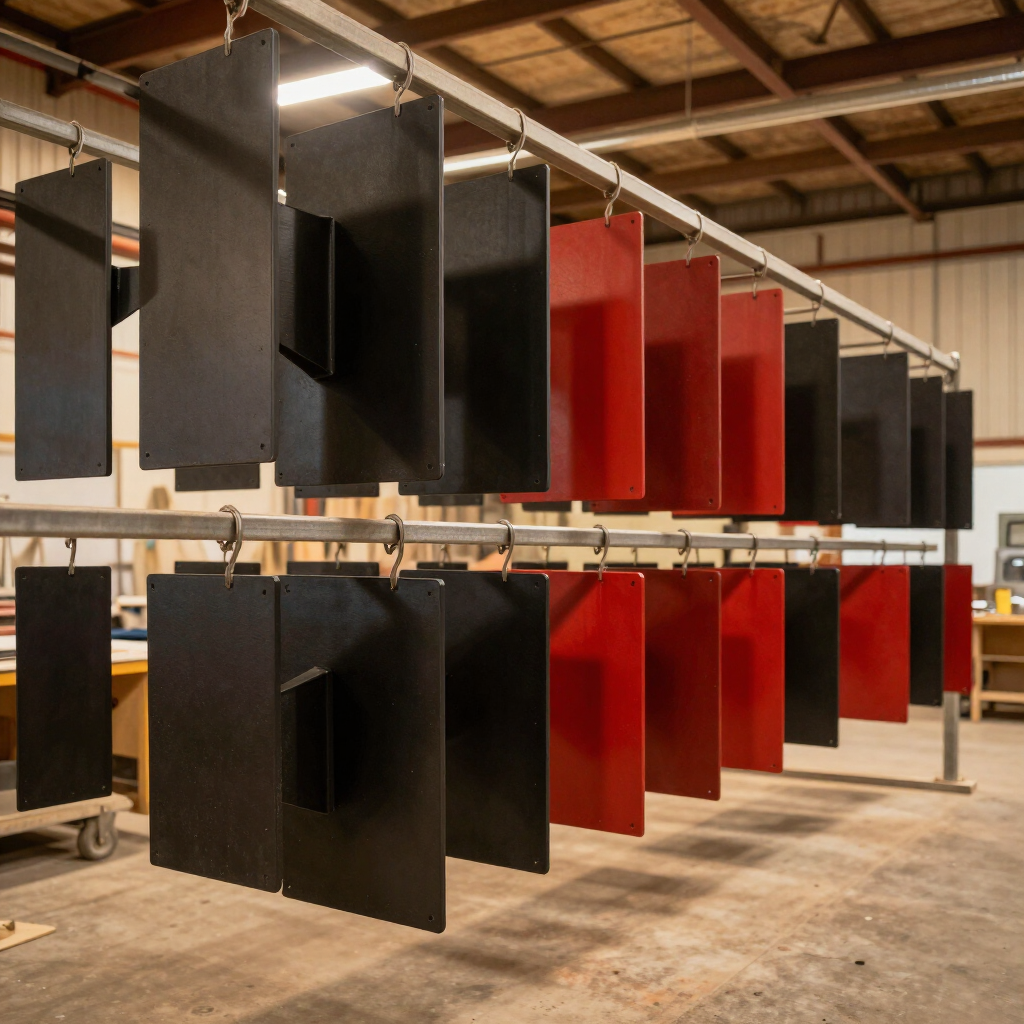
For modern railings, balcony systems, decorative panels, staircases, and custom fabricated art, dark neutrals are often the safest and strongest starting point. RAL 9005 Jet black gives you sharp contrast and a very clean modern look. RAL 7016 Anthracite grey softens that just a bit and often feels more architectural and upscale. RAL 9006 White aluminium works well when you want a brighter industrial or gallery-style finish.

If you are trying to pair coated metal with warm woods, concrete, glass, or stone, RAL 7016 is often easier to live with than a true black. If you want the metal to become a strong visual anchor, RAL 9005 is usually the more dramatic option. If you want a sculptural feel rather than a heavy contrast, RAL 9006 can be a very smart choice. Those are not hard rules, but they are strong starting points.

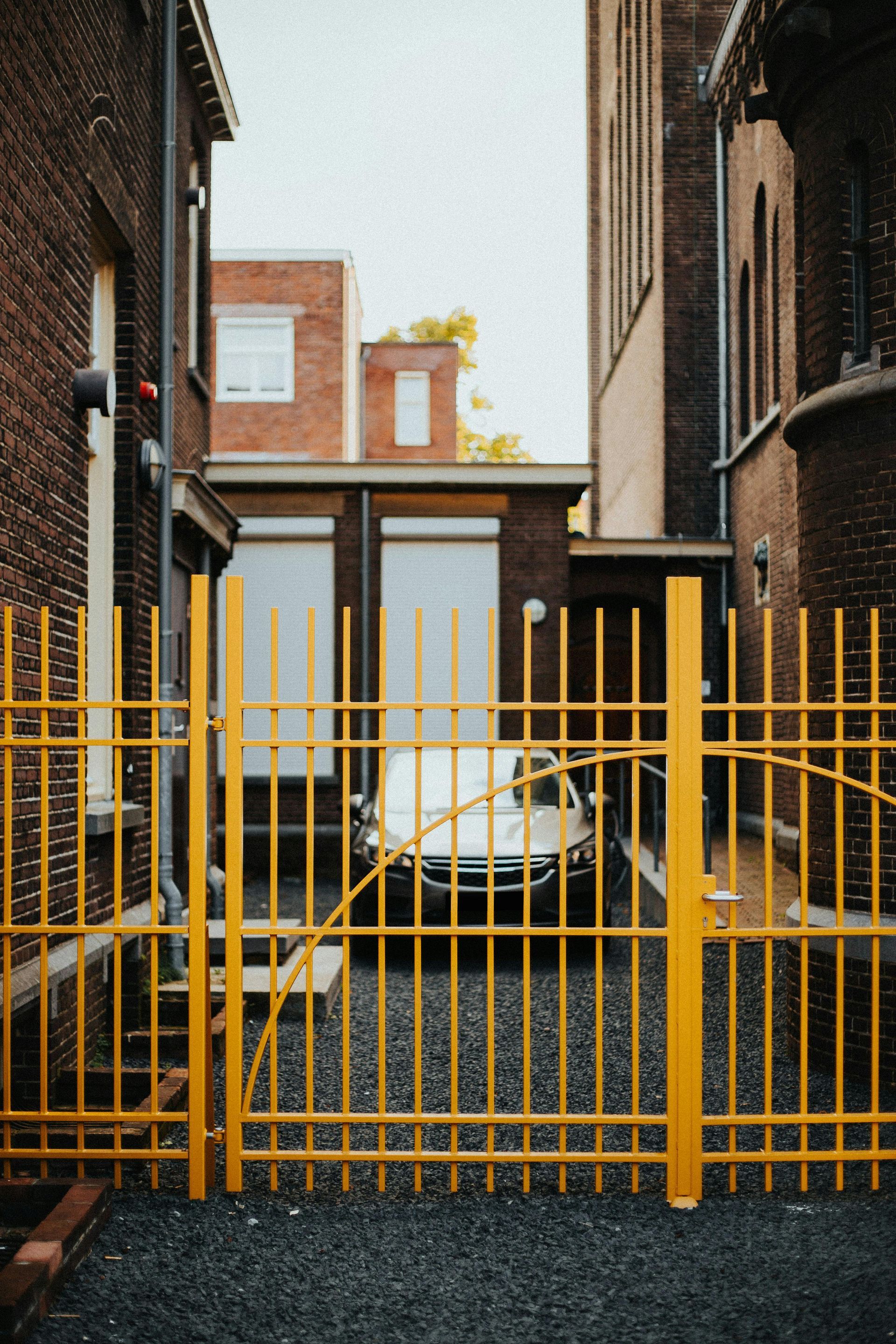
Yellow metal gate blocking a narrow alley with a white car parked behind it between brick buildings

Best RAL colours for gates, fences, and rural property work


For gates, fencing, handrails, and outdoor property features, colour needs to work hard. It has to suit the property, tolerate weather, and still look intentional after repeated use. RAL 9005 Jet black is still one of the most versatile options in this category. RAL 8019 Grey brown is a good choice when you want the metal to feel warmer and more grounded. RAL 6005 Moss green often works well where you want the piece to sit more naturally against trees, pasture, or desert landscaping.


This is also where the right finish texture matters. A smooth black can look premium, but a fine-texture darker finish often hides field wear and touch marks better. That is part of why you should think about the finish system, not just the RAL number. Apex’s Powder Coating page makes that easier because the company offers over 6,500 finish options through Prismatic, including matte, satin, metallic, candy, texture, and color-shift finishes.


Best RAL colours for trailers, frames, and off-road parts


For trailers, car frames, racks, utility bodies, off-road parts, and fabricated metal that sees serious use, darker colours usually make the most practical sense. RAL 9005 and RAL 7016 are both strong because they fit the rugged look, pair well with textured finishes, and work across a wide range of shapes and uses.


This is also where Apex’s Large Item Coating capability becomes relevant. The shop specifically calls out 30-foot trailers, full vehicle frames, flatbeds, gates, and large architectural metalwork, all coated in a single run when possible for better consistency. If your project is large, the shop’s 10' × 10' × 30' oven is not a small detail. It directly affects whether your chosen colour can be applied consistently across the whole project. 

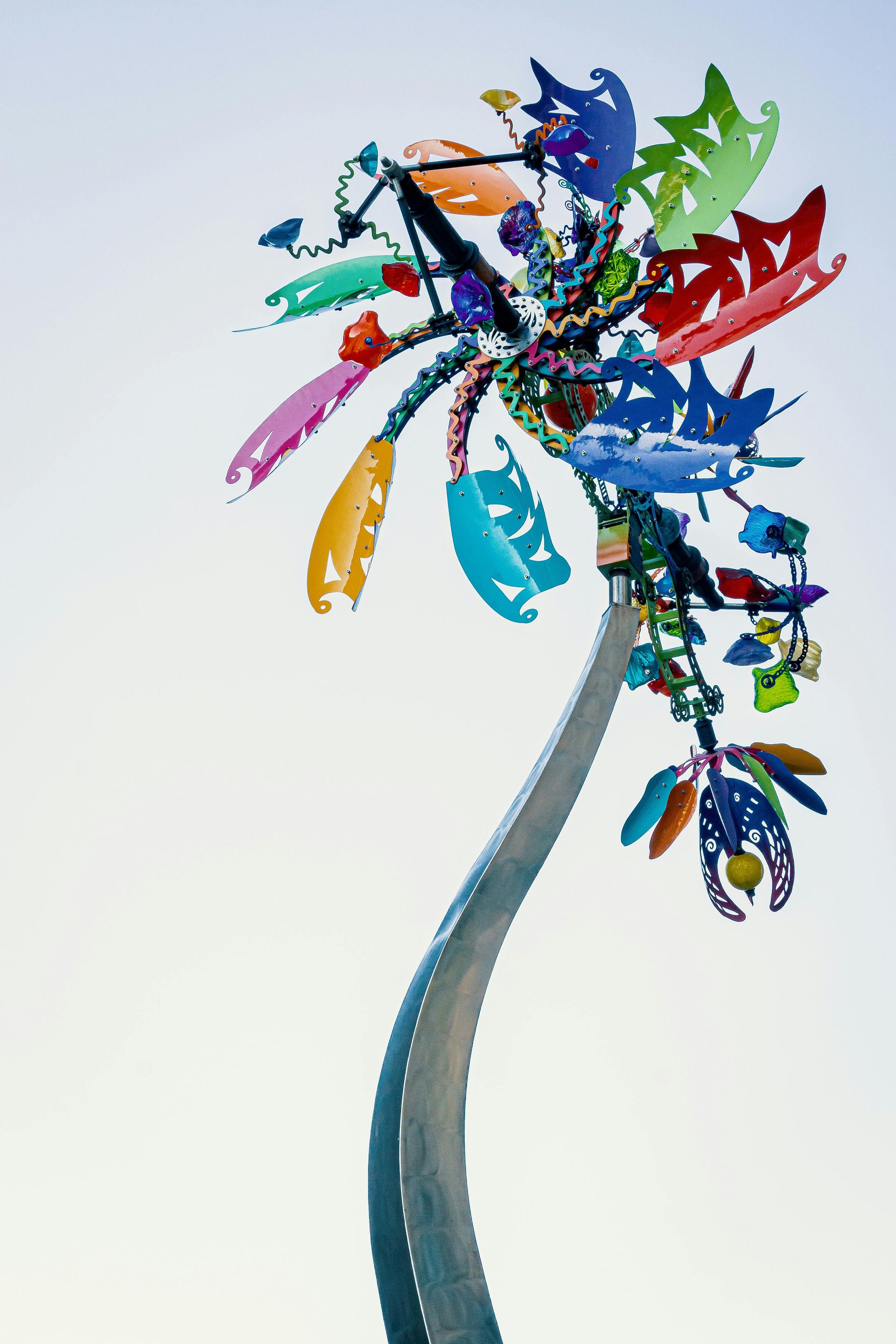
Abstract colorful bird sculpture with blue curved stem and multicolored feather-like shapes on a white background

Illustrative example: a custom art piece for a Phoenix fabricator


To show how this works in real life, imagine a Phoenix fabricator bringing Apex a large custom steel art piece for a commercial courtyard.


The project has strong geometric lines, a few curved sections, and a design language that is modern but not cold. The courtyard includes warm concrete, desert planting, and a lot of direct sun. The fabricator wants the piece to feel bold, but the client does not want a finish that feels too harsh or too glossy.


In that situation, RAL 7016 Anthracite grey would be a very strong contender. It gives the art piece presence, but it does not hit as hard as a pure black. If the client wanted something more reflective or gallery-like, RAL 9006 White aluminium could be a better choice. If the goal were maximum contrast and a more graphic silhouette, RAL 9005 Jet black would make sense. The right answer depends on the environment, the mood of the project, and how the piece is supposed to live in the space.


This kind of project also highlights why Custom Fabrication and Sandblasting matter before the coating even begins. If the welds are rough, the transitions are uneven, or the metal is not properly cleaned, even the best colour choice can fall flat.


Why prep matters as much as colour


A good colour cannot save a bad prep job. Apex’s service pages are very clear on this. Their Sandblasting process is built around the idea that metal should be fabricated, blasted, and coated under one roof to avoid re-contamination and improve adhesion. The site also notes that different media create different surface profiles, which matters because the profile affects how the powder bonds and how the finish performs.


Their Custom Fabrication page makes the same point from another angle. If a part is rusted, cracked, or needs modification, Apex can repair it, build what is missing, and then blast and coat it in the same visit. That is a big advantage because the finish is only as good as the metal under it.


How to choose the right colour for your project


Start with the project type. Is it decorative, architectural, rugged, commercial, or utility-driven? Then think about the setting. Is it indoors, outdoors, dusty, high-touch, or constantly visible? Then think about the design mood. Do you want contrast, softness, brightness, or something more industrial?

After that, narrow the field:


  • Choose RAL 9005 when you want bold, clean contrast.
  • Choose RAL 7016 when you want a darker architectural neutral with a softer edge.
  • Choose RAL 9006 when you want a brighter industrial or gallery feel.
  • Choose RAL 8019 or RAL 6005 when the project should feel more natural or rural.
  • Choose RAL 1023 when visibility matters more than subtlety.


Then review real examples, not just screen swatches. Use Apex’s Gallery, browse the Blog, and reach out through Contact Us when you want guidance tied to an actual project. If you are in Northern Arizona, their Service Areas include communities like Show Low, Pinetop-Lakeside, Snowflake, Taylor, Heber-Overgaard, Holbrook, Springerville, Eagar, Whiteriver, Payson, and Flagstaff.


Final thoughts


The best standard RAL colour for your Arizona project is the one that fits the use case, the setting, and the finish system as a whole. Colour matters, but it is not separate from prep, fabrication, blasting, and curing. When you treat all of those pieces as one process, you end up with a result that looks better and lasts longer.


If you want help choosing the right finish for a gate, trailer, custom art piece, railing, frame, or other metal project, Apex has the right internal path already built for you. Start with contact us

Recent Posts

Painter applying pink paint to a metal surface with a small roller and brush
By Admin September 1, 2026
Quick Answers  Is powder coating better than paint? Powder is generally the stronger choice for removable, oven-safe metal; paint is more practical for installed, oversized, or heat-sensitive parts. Which finish holds up better outdoors? Use an exterior-rated system with sound prep; powder is a durable option for removable parts, while paint can perform well when field repair is important. Is powder coating more expensive? It can cost more up front, but a suitable powder system may reduce refinishing work over the life of the part. Can damaged powder coating be repaired? Touch up small chips to seal the metal; for large damage or a full color change, remove and recoat the part when feasible. Powder coating and paint are both legitimate metal-finishing tools. The decision starts with a physical constraint: can the part be transported to a coating shop and safely handle an oven cure? If the answer is no, liquid paint is not a compromise—it is the usable method. If the answer is yes, powder coating may offer a more durable finish for a part that sees sun, abrasion, weather, or regular cleaning. That distinction keeps the comparison honest. A welded-on railing, structural member, or assembled piece with heat-sensitive components does not become a powder-coating candidate just because powder can be tougher. On the other hand, a removable gate, wheel, trailer component, furniture frame, or equipment guard is often well suited to shop preparation and a baked finish. How the Two Finishes Work Liquid paint Liquid paint carries resin and pigment in a water- or solvent-based system. It is brushed, rolled, or sprayed, then dries and cures under the conditions specified by its manufacturer. A durable paint job usually involves more than one layer: surface preparation, an appropriate primer, one or more finish coats, and sometimes a clear coat. The advantage is flexibility. Paint can be applied to installed work, large structures, nonmetal substrates, and assemblies that cannot tolerate curing heat. The trade-off is that application conditions, film build, and drying intervals have a larger effect on the result. Runs, dry spray, inconsistent coverage, and poor adhesion are all possible when the process is rushed. Powder coating Powder coating uses dry resin-and-pigment particles rather than a liquid carrier. The particles are applied electrostatically to a grounded part, then heated until the coating flows and cures. The Powder Coating Institute’s overview of the process explains the basic application and cure sequence. Because the work happens in a controlled shop environment, the coater can manage preparation, masking, application, and cure more consistently. The part still has to qualify: it must be transportable, fit the available equipment, and tolerate the cure schedule for the selected powder. That is why powder works well for many metal components but not for every project.

Close-up of a chrome V emblem and silver slashes on a red car hood
By Admin August 27, 2026
Northern Arizona guide to sandblasting and powder coating: learn how prep, finish choice, and Arizona weather affect durability, cost, and results.
Worker using a grinder on a metal surface, sending bright sparks in a workshop
By Admin August 24, 2026
Learn how industrial fabricators support Arizona infrastructure through custom fabrication, sandblasting, powder coating, and metal finishing.
Black flatbed pickup truck parked in a dry field under a clear blue sky
By Admin August 20, 2026
Explore custom truck bed powder coating in Arizona, including fabrication, tool boxes, sandblasting, utility add-ons, and durable work truck finishes.
Black metal bolt with hex nut and threaded shaft on a gray surface
By Admin August 13, 2026
Learn how much it costs to get a metal part made in Arizona, including fabrication, welding, sandblasting, powder coating, and key price factors.
Person welding metal, sending bright sparks in a dim workshop.
By Admin August 11, 2026
Compare manufacturer vs fabricator, where welding fits, and when Arizona metal projects need fabrication, sandblasting, powder coating, or full-service finishing.
Welder in protective mask and gloves sparks bright arc welding on dark metal surface
By Admin August 4, 2026
TL;DR What is welding? Welding is the process of joining metal parts together so they function as one piece. It is used for trailer repairs, gates, railings, brackets, racks, off-road parts, ranch equipment, commercial signs, industrial frames, custom fabrication, and metal repair. Is welding the same as fabrication? No. Welding joins metal. Fabrication is the larger process of building, repairing, modifying, fitting, welding, grinding, prepping, and finishing metal. A fabrication project may include welding, but welding is not the whole project. What are the main types of welding? The most common welding types most Arizona customers will hear about are MIG welding, TIG welding, stick welding, and flux-cored welding. Other processes include oxy-fuel welding, resistance spot welding, submerged arc welding, laser welding, and plasma arc welding. What is MIG welding best for? MIG welding is commonly used for steel frames, brackets, gates, railings, trailer repairs, automotive parts, racks, and general fabrication. It is fast, efficient, and practical for many shop projects. What is TIG welding best for? TIG welding is best for clean, precise welds on aluminum, stainless steel, thin metal, visible welds, custom brackets, motorcycle parts, and higher-appearance fabrication. What is stick welding best for? Stick welding is useful for field repairs, ranch equipment, thicker steel, outdoor repair, utility work, and situations where portability matters. What is flux-cored welding best for? Flux-cored welding is useful for thicker steel, outdoor welding, repair work, fabrication, and jobs where wind can interfere with standard shielding gas. Can welded metal be powder coated? Yes, but the weld should be inspected, cleaned, blasted or prepped, masked, powder coated, cured, and inspected. Welding after powder coating can burn or damage the finish. Does welded metal need sandblasting before powder coating? Often, yes. Welding can leave slag, spatter, mill scale, oils, grinding residue, and surface contamination. Sandblasting or media blasting helps create a cleaner surface for powder coating adhesion. What do people ask in welding and powder coating forums? Common questions include whether powder coating will hide gaps, whether mill scale must be removed, whether welding should happen before coating, whether outdoor powder coat can rust, and why surface prep matters so much. The answer is usually the same: repair and prep the metal before finishing it. If you are asking what is welding? , the simple answer is that welding is the process of joining metal together using heat, pressure, filler material, or a combination of those methods. In Arizona, welding is used for everyday repair and custom metalwork, but it is also part of a larger finishing process. If the part will be powder coated, the weld should be cleaned, inspected, sandblasted or media blasted when needed, and finished with the right coating system for Arizona heat, UV exposure, dust, road debris, ranch use, off-road abuse, and monsoon moisture. Welding Starts the Job, Prep Finishes It TWI defines welding as “ a fabrication process whereby two or more parts are fused together .” That is the technical foundation. Welding joins the metal, but it does not automatically make the part finished. Apex explains the finishing side clearly: “ Repairs are made with coating in mind. ” That matters because a weld can be strong but still need cleanup, smoothing, blasting, masking, and powder coating before the part is ready for long-term use. Welding vs Fabrication vs Metal Finishing Welding is the joining step. It is how two pieces of metal become connected. Fabrication is the broader project. It may include measuring, cutting, fitting, welding, drilling, grinding, reinforcing, modifying, and preparing the part for its final use. Metal finishing happens after the part is built or repaired. That may include sandblasting, media blasting, masking, powder coating, curing, and final inspection. This is where many customer projects become more involved than expected. For example, a cracked gate hinge may seem like a simple welding job. But if the gate has old paint, rust, rough previous repairs, or chipped coating, the better solution may be weld repair, surface cleanup, sandblasting, and powder coating. That is why Apex’s in-house custom fabrication and finishing workflow is valuable. The repair and the final coating can be planned together.
Person welding in an industrial workshop with large machinery and metal equipment.
By Admin August 4, 2026
Learn what fabrication means in Arizona, including welding, sandblasting, powder coating, metal repair, and how Apex handles fab projects.
Blue powder cloud bursting against a black background
By Admin July 30, 2026
Find where to buy powder coat powder, compare top US suppliers, and learn why Arizona projects still need proper prep, curing, and expert coating.
Straight desert highway leading toward distant red rock mesas under a blue, partly cloudy sky
By Admin July 30, 2026
Compare powder coating textures and finishes for Arizona projects, including matte, satin, gloss, textured, metallic, candy, and hammertone options.
Show More