How to Powder Coat at Home | Why We Don’t Recommend It for Powder Coating in Arizona

Admin • June 16, 2026

Share this article

TL;DR

  • If you are searching how to powder coat at home, you can learn the basic idea, but DIY powder coating is not the best choice for most serious Arizona projects.
  • Powder coating depends on proper surface prep, sandblasting, cleaning, powder selection, grounding, cure temperature, cure time, and final inspection.
  • Most home setups struggle with blasting, curing consistency, part size, powder dust control, and professional-quality adhesion.
  • Arizona heat, UV exposure, dust, wind, and monsoon moisture make weak prep and poor curing fail faster.
  • Professional powder coating is a better option for gates, railings, wheels, trailers, frames, signs, ranch equipment, outdoor furniture, off-road parts, and large fabricated metal.
  • Sandblasting and media blasting are often the difference between a coating that looks good for a few weeks and a coating that lasts.
  • Apex Powder Coating offers custom fabrication, blasting, repair, large item coating, and professional metal finishing under one roof.
  • DIY powder coating may be fine for small indoor hobby parts, but it is not recommended for outdoor Arizona metal that needs durability, safety, or a clean professional finish.


If you are researching how to powder coat at home, the process can look simple online. Clean the part, spray the powder, bake it, and get a tough finish. That version leaves out the details that actually make powder coating work. Real powder coating is a controlled metal finishing process. It depends on clean metal, proper blasting, the right powder, consistent curing, safe dust control, and a final inspection that catches problems before the part leaves the shop.


That is why Apex Powder Coating does not recommend DIY powder coating for serious Arizona projects. If you are coating a gate, railing, wheel, trailer, frame, commercial sign, off-road part, patio furniture, or ranch equipment, the finish has to do more than look good on day one. It has to survive Arizona sun, dust, heat, wind, and moisture.


Why People Want to Powder Coat at Home


The appeal makes sense. DIY powder coating looks like a way to save money, customize parts, and get a stronger finish than spray paint. For small indoor hobby pieces, it can be a learning project. But when you are working with metal that will live outdoors, carry weight, take abuse, or represent your home or business, the stakes are higher.

People usually look into DIY powder coating because they want:

  • a lower upfront cost
  • custom powder coating colors
  • a tougher finish than paint
  • better-looking wheels, brackets, racks, or small parts
  • a restoration option for old metal
  • more control over the project

The problem is that powder coating is not just “paint in powder form.” It is a complete finishing system. If one step is weak, the whole coating can fail.

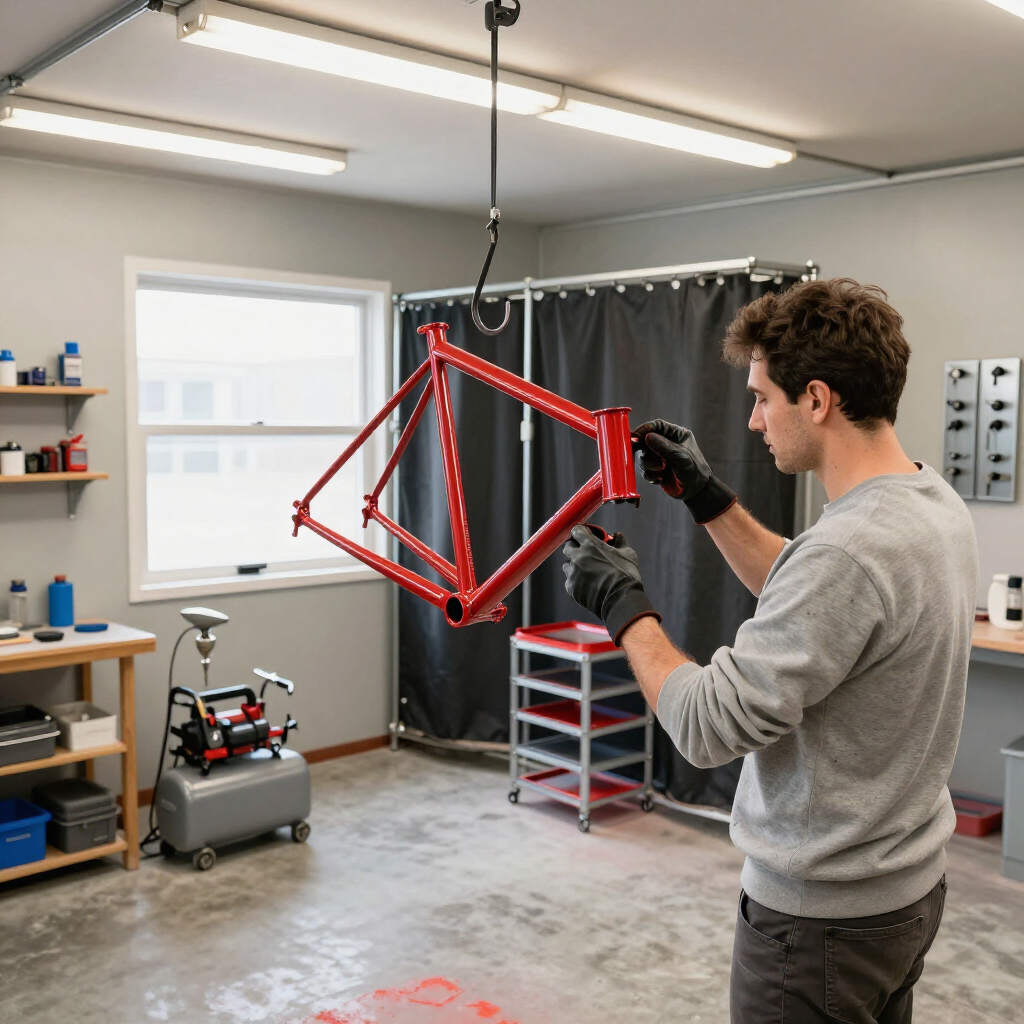
Person in a workshop inspecting a red bicycle frame hanging from the ceiling.

What Powder Coating Actually Requires

1. Metal inspection


Before a part is coated, it needs to be inspected. Rust, old paint, oil, cracks, pitting, weak welds, bent areas, and previous repairs can all affect the final result. Powder coating will not fix damaged metal. It will only cover it.

That is why custom fabrication matters before coating starts. If a gate has a cracked weld, a trailer frame has a damaged bracket, or a railing has rough fabrication marks, those issues should be repaired before the finish is applied.


2. Sandblasting and media blasting


This is one of the biggest differences between DIY powder coating and professional powder coating. Most home setups rely on sanding, wire brushing, or chemical stripping. Those methods may remove some surface material, but they do not match professional sandblasting.


Sandblasting removes rust, failed paint, mill scale, oxidation, and surface contamination. It also creates an anchor profile that helps the powder bond to the metal. Without that profile, the coating may peel, chip, bubble, or lift.


For Arizona powder coating projects, blasting is not a luxury. It is the foundation.


3. Cleaning and handling


After blasting, the metal has to stay clean. Dust, skin oils, moisture, old residue, and shop debris can all interfere with adhesion. A part can look clean and still have contamination in seams, welds, corners, and pitted areas.


Professional shops control how parts are cleaned, masked, handled, and staged before powder is applied. A garage or backyard setup usually cannot match that consistency.


4. Powder selection


Not all powder coatings are the same. Some powders are better for indoor use. Some are built for exterior UV exposure. Some are stronger for corrosion resistance. Some are designed for better color retention, gloss retention, or heavy-duty wear.


Choosing powder by color alone is a common DIY mistake. The right question is not just, “What color do I want?” The better question is, “What coating system fits the way this part will be used?”


5. Application and curing


Powder is applied electrostatically to grounded metal, then cured with heat. The part has to reach the correct temperature for the correct amount of time. If it is under-cured, the finish may look done but perform poorly. If it is over-cured, the color, gloss, or texture may suffer.


Home ovens are not built for serious powder coating. They are too small for many parts, often heat unevenly, and create contamination and safety concerns. A household oven used for powder coating should never be used for food afterward.


 Why DIY Powder Coating Has Safety Concerns


Powder coating involves airborne powder, electrical charge, heat, and dust control. OSHA’s spray finishing standard states:


All areas shall be kept free of the accumulation of powder coating dusts, particularly such horizontal surfaces as ledges, beams, pipes, hoods, booths, and floors.


That is a serious reminder. Powder coating is not just a craft project. Professional shops are built around controlled spaces, ventilation, cleaning, curing equipment, and workflow. Most home garages are not.

Project Factor DIY Powder Coating Professional Powder Coating
Surface Prep Often sanding, wire brushing, or basic stripping Professional sandblasting and media blasting
Powder Selection Often chosen by color only Chosen by use case, exposure, and finish goals
Curing Small oven or inconsistent heat source Controlled curing oven built for coating work
Part Size Limited to small parts Gates, frames, trailers, railings, signs, and large fabricated parts
Safety Controls Limited dust and heat control Shop workflow designed for powder dust, heat, and equipment
Finish Consistency Harder to control Better coverage, texture, adhesion, and inspection
Best Fit Small indoor hobby pieces Serious residential, commercial, industrial, automotive, ranch, and outdoor projects

Why We Don’t Recommend DIY Powder Coating for Arizona Projects

Poor prep causes early failure


The most common DIY failure starts before the powder is ever applied. If old coating, grease, rust, mill scale, or oxidation stays on the surface, the powder cannot bond correctly. The part may look good at first, then chip, peel, or bubble once it is used.


This is especially common around:

  • weld seams
  • edges
  • threaded holes
  • corners
  • pitted metal
  • lower frame sections
  • old painted surfaces

Professional sandblasting solves this by creating a clean, profiled surface before coating.


Arizona sun exposes weak coating systems


Arizona UV exposure is tough on finishes. A powder that might be fine indoors may not be right for a gate, railing, sign, wheel, or trailer that sits outside. If the powder chemistry is wrong, you can see fading, chalking, gloss loss, or premature wear.


For serious outdoor metal, you need a professional coating recommendation based on the project, not just the color.


Home ovens are too small and inconsistent


Many DIY setups rely on small ovens or improvised curing. That creates problems. The part may not fit. The heat may not be even. The metal may not reach full cure temperature. Larger parts may cure inconsistently.


That is one reason large item coating matters. Oversized projects need the right oven capacity, handling process, and inspection. Apex’s large-item capabilities are built for frames, trailers, gates, railings, and other parts that a home setup simply cannot handle.


DIY equipment struggles with coverage


Powder application depends on grounding, powder flow, gun control, part geometry, and consistent movement. Home equipment can struggle with corners, recesses, inside edges, and complex shapes. The result can be thin spots, heavy buildup, orange peel, missed areas, and inconsistent texture.


On a small bracket, that may be acceptable. On a visible railing, wheel, gate, or commercial sign, it is not.


Case-Style Example: The DIY Gate That Needed a Professional Reset


Imagine an Arizona homeowner with a decorative steel gate. They watched a few videos, bought a DIY powder coating kit, chose a black powder, and tried to coat the gate in sections. At first, the finish looked acceptable. It was black, it had some shine, and from a distance it looked better than the old paint.

Then the gate sat through Arizona sun, dust, and moisture. The finish started chipping around the welds. Lower sections showed bubbling. Edges began to rust. The powder coating did not fail because powder coating is a bad finish. It failed because the process was incomplete.


A professional reset would start with inspection. If welds or rust damage needed repair, custom fabrication would happen first. The old coating would be removed through blasting. The metal would be cleaned and prepped. The right exterior powder would be selected. Then the gate would be coated, cured, inspected, and released.


That is the difference between applying powder and finishing metal correctly.


Projects You Should Not Powder Coat at Home

Gates and railings


Gates and railings are exposed, visible, and full of edges, welds, and corners. They need strong prep and a finish that can handle outdoor Arizona conditions.


Wheels and automotive parts


Wheels deal with heat, brake dust, road debris, washing, and impact. Poor prep or poor curing can create finish failure that is expensive to correct.


Trailers, racks, and frames


Trailer powder coating, frame powder coating, and rack coating require size capacity and even curing. These projects belong in a professional shop.


Signs and commercial metalwork


Signs and commercial metal are public-facing. A bad finish affects the look of the whole property. Flat panels and large surfaces show defects quickly.


Rusted or previously painted metal


Old coatings and rust require serious prep. Coating over unknown material is one of the easiest ways to create failure.


When DIY Powder Coating Might Be Acceptable


DIY powder coating may be acceptable for small indoor hobby parts where failure does not matter much. Practice pieces, small brackets, and low-value decorative items can be a way to understand the basic process.

It is not the right move for:

  • structural parts
  • outdoor metal
  • expensive parts
  • customer projects
  • large parts
  • safety-related parts
  • parts that need a professional finish

If the part needs to last, professional powder coating is the better choice.

Why Apex Powder Coating Is a Better Option


Apex Powder Coating is built for real Arizona projects. The shop offers powder coating, sandblasting, custom fabrication, and large item coating, giving you a more complete process than a DIY kit can offer.

Apex can help with:

  • rust removal
  • old paint removal
  • media blasting
  • metal repair
  • weld cleanup
  • custom brackets and frames
  • exterior powder selection
  • oversized powder coating
  • final inspection
  • professional metal finishing

You can also review the Gallery, read Testimonials, learn more on the About Us page, or check the Service Areas before reaching out through Contact Us.


Final Thoughts


Searching how to powder coat at home is a good way to understand the basics, but it does not mean DIY is the right choice for your project. Powder coating is a professional metal finishing system. It depends on prep, blasting, powder choice, application, curing, safety control, and inspection.


For Arizona projects, the margin for error is smaller. Sun, heat, dust, wind, and moisture expose weak prep and poor curing quickly. If you are coating gates, railings, wheels, trailers, frames, signs, outdoor furniture, ranch equipment, off-road parts, or large fabricated metal, professional powder coating is usually the smarter long-term decision.


For a finish built for real Arizona conditions, contact Apex Powder Coating for a free quote on powder coating, sandblasting, custom fabrication, large item coating, and professional metal finishing.


Recent Posts

Blue powder cloud exploding against a black background
By Admin June 10, 2026
Compare custom coatings, powder coating, and Cerakote-style finishes for Arizona projects, including use cases, durability, prep, and coating selection tips.
Mojave County Holbrook Complex sign with sunburst pillars, set in a desert landscape under a blue sky
By Admin June 9, 2026
Find out why powder coating Tucson projects need the right powder type, proper sandblasting, and expert prep for durable custom signs and metalwork.
Gloved hand spray-painting a car part in a paint booth
By Admin June 1, 2026
Learn how the right powder coating type affects durability, UV resistance, and finish quality for Arizona metal projects, including Mesa railings.
Workers using a crane to install black stair treads in an indoor construction site
By Admin May 26, 2026
Learn how powder coating works on a custom three-piece staircase in Mesa, AZ, and why prep, blasting, and curing matter for lasting results.
Scattered colorful paint swatches overlapping on a dark background
By Admin May 20, 2026
Discover the best standard RAL colour for Arizona projects, from gates to custom art, with powder coating tips on durability, style, and prep.
Welder creating bright sparks on a metal surface in a dark industrial workshop
By Admin May 18, 2026
Why quality fabrication services matter for powder coating in Arizona, including stronger repairs, better prep, improved durability, and longer-lasting metal finishes.
Professional powder coating process in Arizona facility
May 13, 2026
Discover why powder coating in Phoenix, AZ is the best choice for durable metal finishes. Learn about sandblasting, UV protection, and 6,500+ custom colors.
A variety of powder coated metal samples in bright colors.
May 13, 2026
Explore the top powder coating projects in Maricopa County, including automotive, residential, and industrial applications. Learn why powder coating is the superior choice for Arizona's climate.
Black truck chassis frame on jack stands in a workshop, with rear axle and wheels attached
May 7, 2026
Learn why Apex Powder Coating is the leading provider for metal restoration and protective finishes in Show Low, Arizona and the White Mountains.
Large industrial powder coating oven for metal parts
May 4, 2026
Discover how powder coating oven size affects the quality, durability, and capacity of your metal projects. Learn why professional industrial ovens produce better results.
Show More