What Is Welding? | Different Types and Their Use Cases in Arizona
TL;DR
- What is welding? Welding is the process of joining metal parts together so they function as one piece. It is used for trailer repairs, gates, railings, brackets, racks, off-road parts, ranch equipment, commercial signs, industrial frames, custom fabrication, and metal repair.
- Is welding the same as fabrication? No. Welding joins metal. Fabrication is the larger process of building, repairing, modifying, fitting, welding, grinding, prepping, and finishing metal. A fabrication project may include welding, but welding is not the whole project.
- What are the main types of welding? The most common welding types most Arizona customers will hear about are MIG welding, TIG welding, stick welding, and flux-cored welding. Other processes include oxy-fuel welding, resistance spot welding, submerged arc welding, laser welding, and plasma arc welding.
- What is MIG welding best for? MIG welding is commonly used for steel frames, brackets, gates, railings, trailer repairs, automotive parts, racks, and general fabrication. It is fast, efficient, and practical for many shop projects.
- What is TIG welding best for? TIG welding is best for clean, precise welds on aluminum, stainless steel, thin metal, visible welds, custom brackets, motorcycle parts, and higher-appearance fabrication.
- What is stick welding best for? Stick welding is useful for field repairs, ranch equipment, thicker steel, outdoor repair, utility work, and situations where portability matters.
- What is flux-cored welding best for? Flux-cored welding is useful for thicker steel, outdoor welding, repair work, fabrication, and jobs where wind can interfere with standard shielding gas.
- Can welded metal be powder coated? Yes, but the weld should be inspected, cleaned, blasted or prepped, masked, powder coated, cured, and inspected. Welding after powder coating can burn or damage the finish.
- Does welded metal need sandblasting before powder coating? Often, yes. Welding can leave slag, spatter, mill scale, oils, grinding residue, and surface contamination. Sandblasting or media blasting helps create a cleaner surface for powder coating adhesion.
- What do people ask in welding and powder coating forums? Common questions include whether powder coating will hide gaps, whether mill scale must be removed, whether welding should happen before coating, whether outdoor powder coat can rust, and why surface prep matters so much. The answer is usually the same: repair and prep the metal before finishing it.
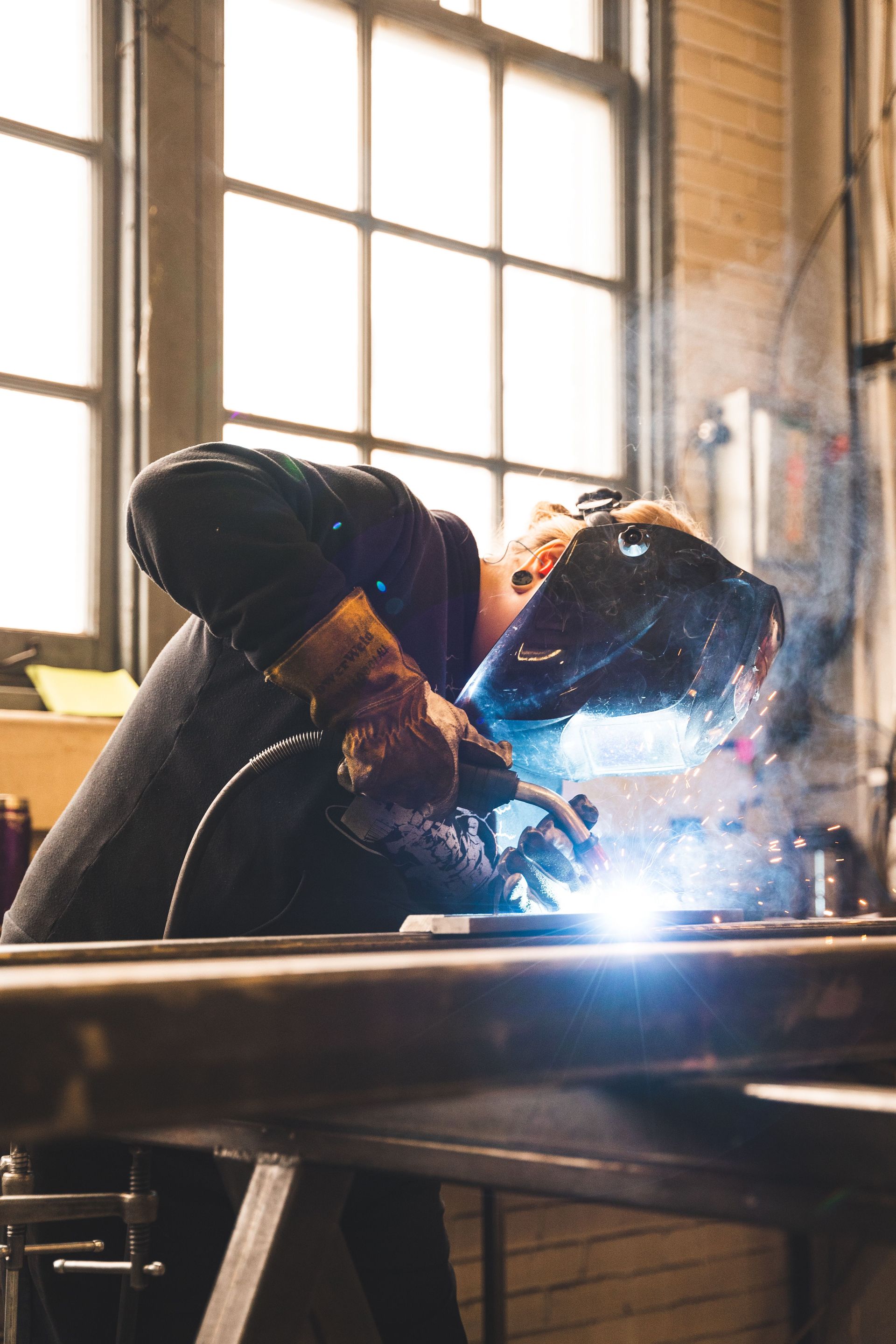
If you are asking what is welding?, the simple answer is that welding is the process of joining metal together using heat, pressure, filler material, or a combination of those methods. In Arizona, welding is used for everyday repair and custom metalwork, but it is also part of a larger finishing process. If the part will be powder coated, the weld should be cleaned, inspected, sandblasted or media blasted when needed, and finished with the right coating system for Arizona heat, UV exposure, dust, road debris, ranch use, off-road abuse, and monsoon moisture.
Welding Starts the Job, Prep Finishes It
TWI defines welding as “a fabrication process whereby two or more parts are fused together.” That is the technical foundation. Welding joins the metal, but it does not automatically make the part finished.
Apex explains the finishing side clearly: “Repairs are made with coating in mind.” That matters because a weld can be strong but still need cleanup, smoothing, blasting, masking, and powder coating before the part is ready for long-term use.
Welding vs Fabrication vs Metal Finishing
Welding is the joining step. It is how two pieces of metal become connected. Fabrication is the broader project. It may include measuring, cutting, fitting, welding, drilling, grinding, reinforcing, modifying, and preparing the part for its final use.
Metal finishing happens after the part is built or repaired. That may include sandblasting, media blasting, masking, powder coating, curing, and final inspection. This is where many customer projects become more involved than expected.
For example, a cracked gate hinge may seem like a simple welding job. But if the gate has old paint, rust, rough previous repairs, or chipped coating, the better solution may be weld repair, surface cleanup, sandblasting, and powder coating. That is why Apex’s in-house custom fabrication and finishing workflow is valuable. The repair and the final coating can be planned together.
MIG Welding: Fast, Practical, and Common
MIG welding, also called GMAW, uses a continuously fed wire electrode and shielding gas to create the weld. It is one of the most common welding processes for general fabrication and repair.
MIG welding is often used for steel frames, gates, railings, brackets, trailer repairs, racks, automotive parts, and shop-built assemblies. It is efficient, relatively fast, and practical for many common metal projects.
For Arizona customers, MIG welding is often a good fit when a steel part needs to be repaired or fabricated before coating. A trailer bracket, railing section, gate frame, or equipment mount may be welded first, then cleaned up, blasted, and powder coated.
The limitation is that MIG welding usually depends on shielding gas. Wind can create issues in outdoor conditions, and the metal still needs to be clean enough for a proper weld. A fast weld is not automatically a good weld, and a good weld is not automatically ready for coating.
TIG Welding: Clean, Precise, and Controlled
TIG welding, also called GTAW, uses a tungsten electrode to create the arc. Filler metal may be added separately by hand. TIG is known for precision, control, and clean-looking welds.
TIG welding is often used for aluminum, stainless steel, thin metal, visible welds, decorative parts, motorcycle components, custom brackets, and higher-end fabrication where appearance matters. If the weld will be seen or the material is more sensitive to heat, TIG may be the better choice.
For Arizona projects, TIG welding can be especially useful on aluminum or stainless parts that need a clean appearance before finishing. It is slower and requires more skill, but it gives the welder excellent control.
The tradeoff is cost and time. TIG is not always the most efficient process for heavy ranch equipment, large steel frames, or utility repairs where appearance is less important than strength and speed.
Stick Welding: Portable and Useful for Heavy Repair
Stick welding, also called SMAW, uses a flux-coated electrode rod. The rod melts and deposits filler metal while the flux helps shield the weld.
Stick welding is useful for outdoor repairs, ranch equipment, heavier steel, field work, structural-style repair, and utility metal. It does not require a shielding gas bottle, which makes it practical in some outdoor or remote situations.
The downside is cleanup. Stick welding creates slag that must be removed. It can also create a rougher appearance than MIG or TIG if the repair is not cleaned up properly. If the part will later be powder coated, slag, spatter, and residue need to be removed before coating.
In Arizona, stick welding may be practical for ranch, field, and heavy repair work, but a finished part still needs proper prep before powder coating.
Flux-Cored Welding: Strong for Outdoor and Thicker Steel
Flux-cored welding, also called FCAW, uses a tubular wire filled with flux. Some flux-cored welding is self-shielded, while other versions use shielding gas.
This process is useful for thicker steel, outdoor welding, repair work, fabrication, and jobsite conditions where wind can make gas-shielded MIG welding harder. It can deposit metal quickly and is practical for many heavier repair situations.
Like stick welding, flux-cored welding can leave slag and spatter that must be cleaned up. If the final part needs powder coating, the shop should remove residue, smooth rough areas where appropriate, and prepare the surface before coating.
Other Welding Types You May Hear About
Oxy-fuel welding uses oxygen and fuel gas to create a flame. Today, it is more commonly associated with heating, cutting, brazing, and restoration work than with many modern fabrication jobs.
Resistance spot welding is common in sheet metal and production settings. You see it in automotive and manufacturing environments where repeated sheet metal joins are needed.
Submerged arc welding is used in heavy industrial and production work, especially with thick plate, beams, pipe, and long straight welds. Laser welding and plasma arc welding are more specialized processes used in precision manufacturing, automation, aerospace, medical, and high-spec industrial work.
For most Arizona customers bringing in gates, trailers, brackets, railings, racks, ranch equipment, or off-road parts, the processes you are most likely to discuss are MIG, TIG, stick, and flux-cored welding.

Which Welding Type Fits Your Project?
The right process depends on the material, thickness, location, strength requirement, appearance goal, and final finish.
A trailer repair may use MIG, flux-cored, or stick depending on the part and repair conditions. Aluminum components often call for TIG or MIG. A stainless decorative part may benefit from TIG. A ranch repair may be handled with stick or flux-cored welding. A gate or railing may use MIG for practical steel fabrication.
For powder coating prep, the exact welding process matters less than the final condition of the metal. The weld should be sound, the part should be cleaned, and the surface should be prepared. If the weld leaves heavy spatter, sharp edges, gaps, or rough grinding marks, those issues can still show through the final coating.
Why Welding Quality Matters Before Powder Coating
Powder coating can create a durable, clean, professional finish, but it will not fix a bad weld. It will not correct poor penetration, porosity, gaps, cracked welds, rust-through, missing metal, heavy spatter, or poor fit-up.
This is a major theme in welding and powder coating forums. People often ask if powder coating will fill gaps or hide surface flaws. The practical answer is no. If you can catch a gap or defect with your fingernail, there is a good chance it will still show after coating.
That is why the proper sequence matters:
Inspect the part, weld or repair it, clean up the weld, sandblast or media blast the surface, mask critical areas, powder coat the part, cure it, and inspect the finished result.
Apex’s sandblasting process fits into that sequence because blasting removes rust, old paint, mill scale, weld slag, and contaminants before coating.
Apex-Style Example: A Gate Repair That Needed More Than a Weld
Imagine you bring in a steel gate from an Arizona property. The hinge plate is cracked, the old paint is chipped, rust is starting around the weld area, and the gate has rough previous repairs.
A quick weld may reconnect the hinge plate, but the gate still has old coating, rust, rough edges, and surface contamination. If you powder coat over that without proper prep, the finished gate may look better at first but still have weak spots.
An Apex-style workflow would evaluate the full project. The hinge plate could be repaired or reinforced. The weld could be cleaned up. The gate could be blasted to remove failing finish and rust. Then the part could be masked, coated, cured, and inspected. That turns a repair into a finished metal project.
What Apex Does Differently With Welding, Fabrication, and Finishing
Apex is not just a coating-only shop. Apex offers in-house welding repair, custom fabrication, sandblasting, powder coating, and large-item coating. That matters because many parts are not ready to coat when they arrive.
If a part has cracked welds, broken tabs, bent brackets, old coating, rust, or poor previous repairs, Apex can evaluate the issue before coating. The project can move from repair to blasting to powder coating under one workflow.
Apex also has a 10' × 10' × 30' curing oven, which helps with large projects like gates, railings, car frames, trailer frames, flatbeds, truck beds, equipment, and larger fabricated assemblies. You can learn more about that capacity on Apex’s large item coating page.
Common Questions About Welding
What is welding in simple terms?
Welding joins metal parts together using heat, pressure, filler material, or a combination of methods so the parts function as one piece.
What is the easiest type of welding to learn?
Many beginners start with MIG or flux-cored welding because wire-feed machines are approachable. That does not mean the work is automatically easy. Material prep, machine settings, technique, safety, and inspection still matter.
What is the difference between MIG and TIG welding?
MIG uses continuously fed wire and is often faster for general fabrication. TIG uses a tungsten electrode and separate filler rod, giving more control and a cleaner appearance, especially on aluminum, stainless steel, and thin material.
Can you weld aluminum?
Yes. Aluminum is commonly welded with TIG or MIG, but it requires the right process, cleanliness, filler, and heat control.
Can you powder coat after welding?
Yes. Welding should usually happen before powder coating. After welding, the part should be cleaned, blasted or prepped, masked, coated, cured, and inspected.
Does welding ruin powder coating?
Welding after coating will burn and damage the finish around the weld area. If a part needs repair, it is usually better to weld first and coat afterward.
Final Thoughts
If you are asking what is welding?, remember that welding is the joining step, not always the whole job. A complete Arizona metal project may include welding, fabrication, repair, sandblasting, powder coating, curing, and final inspection.
The right welding process depends on the material, thickness, strength needs, appearance requirements, location, and final finish. For trailers, gates, railings, off-road parts, ranch equipment, brackets, signs, and custom metalwork, welding is often the first step. Surface prep and powder coating are what turn that repair into a finished project.
If you need welding repair, custom fabrication, sandblasting, powder coating, or metal finishing in Arizona, Apex Powder Coating can help you choose the right repair, prep, and finish for your project.